
Accurate liquid flow measurement is essential in many industrial, laboratory, and process-control environments. When liquids operate at low temperatures, achieving precise and consistent readings becomes more challenging. This is where a low temperature liquid flow meter plays a critical role. Designed to perform reliably under cold conditions, these specialized flow meters ensure accurate monitoring, system protection, and efficient operation. In this article, we explore how a low temperature liquid flow meter ensures flow accuracy and why advanced design features make all the difference.
What Is a Low Temperature Liquid Flow Meter?
It is a flow measurement device engineered to operate accurately when fluids are significantly colder than ambient conditions. These meters are built with materials, sensors, and electronics capable of withstanding low temperatures without performance degradation.
They are commonly used in industries such as chemical processing, refrigeration systems, HVAC applications, heat transfer systems, and laboratory testing. In these environments, even small inaccuracies in flow measurement can lead to inefficiencies, safety risks, or equipment damage.
Challenges of Measuring Flow at Low Temperatures
Measuring liquid flow at low temperatures presents unique challenges that standard flow meters may not handle effectively:
- Changes in fluid viscosity: Cold liquids often become thicker, affecting flow behavior.
- Density variations: Temperature shifts can alter fluid density, influencing measurement accuracy.
- Component contraction: Mechanical parts may shrink slightly in cold environments, impacting sensor alignment.
- Signal instability: Electrical signals can be affected by temperature extremes.
A low temperature liquid flow meter is specifically designed to overcome these challenges and maintain accurate readings.
How a Low Temperature Liquid Flow Meter Works
Most low temperature liquid flow meters operate using mechanical or electronic sensing principles. In turbine-based designs, liquid flowing through the meter causes a rotor to spin. The rotational speed is directly proportional to the flow rate.
Sensors detect the rotor’s movement and convert it into electrical pulses. These pulses are processed by internal electronics, which calculate the flow rate and convert it into a standardized output signal such as current or voltage. Advanced models use microprocessors to further refine the signal, ensuring reliable performance even in cold environments.
Key Design Features That Ensure Flow Accuracy
Precision Sensing Technology
Accurate flow measurement begins with precise detection. High-quality low temperature liquid flow meters use sensitive sensors capable of detecting even slight changes in rotor movement. These sensors are designed to function consistently despite low temperatures, ensuring that each rotation is accurately recorded.
The result is dependable flow data across a wide operating range, even when fluid properties change.
Digital Signal Processing
Digital signal processing is a major contributor to flow accuracy. Internal microprocessors filter out noise, stabilize readings, and eliminate false signals caused by vibration or electrical interference.
For low temperature applications, digital processing helps maintain measurement stability during startup, shutdown, or rapid temperature changes. This ensures smooth, consistent flow readings rather than fluctuating or unreliable outputs.
Calibration and Temperature Compensation
Calibration is essential for maintaining accuracy in any flow meter, but it becomes especially important at low temperatures. A low temperature liquid flow meter is calibrated to account for variations in viscosity and density that occur when liquids cool.
Some meters incorporate temperature compensation algorithms that automatically adjust calculations based on operating conditions. This allows the meter to deliver accurate flow data across its entire temperature range without frequent manual recalibration.
Stable Output Signals
Reliable communication with control systems is another critical factor. Low temperature liquid flow meters typically provide standardized output signals such as 4–20 mA or 0–10 VDC. These signals are resistant to electrical noise and can transmit accurate data over long distances.
Stable output ensures that controllers, alarms, and monitoring systems receive precise flow information, enabling real-time decision-making and automation.
Role of the Proteus in Accurate Flow Measurement
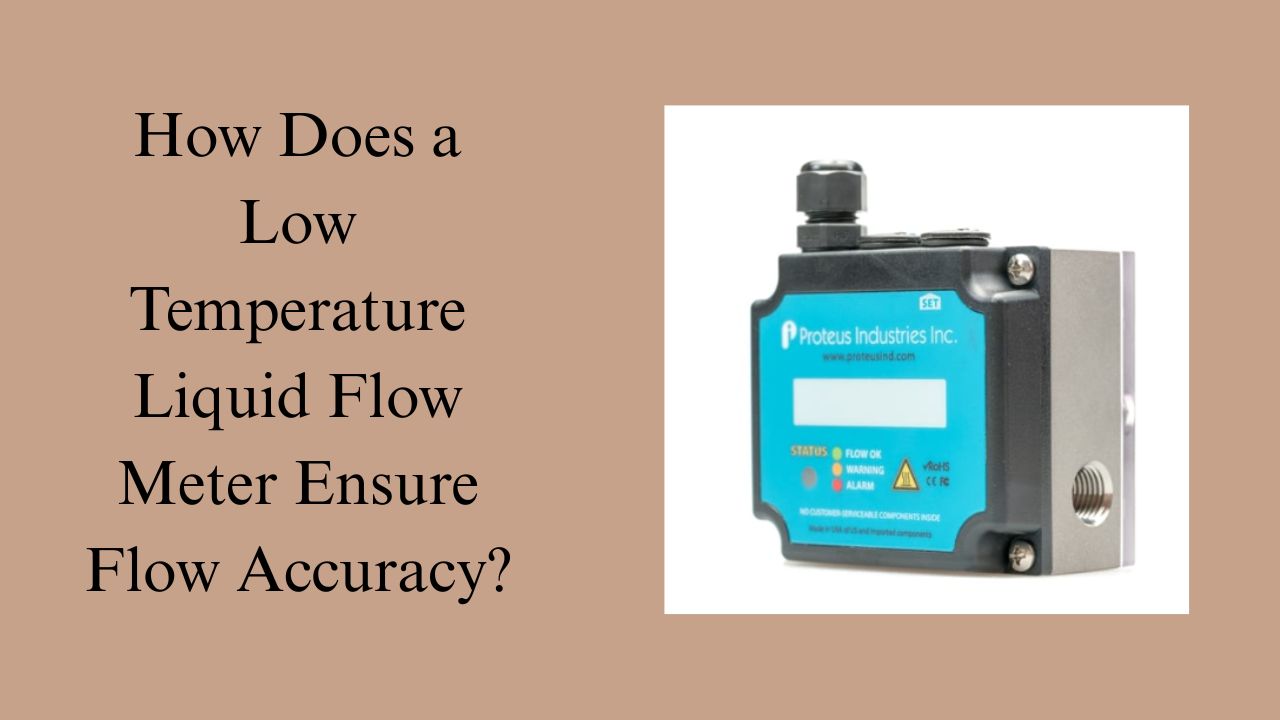
The Proteus 8000 Series is an example of a flow meter designed to perform accurately in low temperature environments. It combines turbine-based measurement with advanced digital electronics to deliver reliable results.
Key characteristics that support flow accuracy include:
- A wide operating temperature range suitable for cold liquids
- Consistent accuracy across the full flow range
- Built-in digital processing for stable, repeatable measurements
- Rugged construction for harsh industrial environments
These features make it suitable for applications where dependable low temperature liquid flow measurement is essential for process efficiency and equipment protection.
Benefits of Accurate Low Temperature Flow Measurement
Using a reliable low temperature liquid flow meter provides multiple operational advantages:
Improved Process Control
Accurate flow data allows precise control of liquid delivery, improving product consistency and reducing waste.
Enhanced Equipment Protection
Flow alarms and monitoring features help detect abnormal conditions early, preventing pump damage, overheating, or system failure.
Greater Energy Efficiency
Precise flow measurement reduces over-pumping and unnecessary energy consumption, lowering operating costs.
Increased System Reliability
Stable and accurate measurements minimize unexpected downtime and maintenance issues.
Conclusion
It ensures flow accuracy through a combination of precision sensing, digital signal processing, calibration, and stable output technology. These features work together to overcome the challenges posed by cold fluids, delivering reliable and consistent flow data.
Whether used in industrial processing, refrigeration, or laboratory systems, accurate low temperature flow measurement is essential for safety, efficiency, and performance. Choosing a well-designed flow meter ensures that even in extreme conditions, your system remains under control and operating at its best.